

acid etched glass manufacturers
Understanding Indicating Micrometers Precision Measurement Tools In the realm of precision measurement, few instruments are as revered as the indicating micrometer. This essential tool plays a crucial role in fields such as engineering, manufacturing, and materials science, where accurate measurements can significantly influence the quality of products and outcomes of experiments. In this article, we will delve into what indicating micrometers are, their working principles, applications, and advantages, highlighting their importance in today's precision-driven world. What is an Indicating Micrometer? An indicating micrometer is a device used to measure small distances with high precision. Unlike traditional micrometers that typically provide measurements using a scale, indicating micrometers feature a dial or digital display, which shows the measurement with greater accuracy and ease. This design allows users to quickly read and record measurements, making them an indispensable tool in various applications. Working Principles The fundamental working principle of an indicating micrometer involves a calibrated screw mechanism, known as the micrometer screw. When the measuring spindle (the part that comes into contact with the object being measured) is turned, it moves toward or away from the anvil (the fixed reference point). The distance the spindle travels is proportional to the rotation of the screw, allowing for precise measurements. The indication system is where these devices truly shine. The most common type is the mechanical dial indicator, which translates the movement of the spindle into a dial reading. As the spindle moves, it rotates a gear mechanism attached to a needle that sweeps across a graduated scale on the dial face. This enables users to easily read measurements with a high degree of accuracy, often down to the thousandths of an inch or hundredths of a millimeter. With the advancement of technology, digital indicating micrometers have become increasingly popular . Instead of a mechanical display, they use electronic sensors to provide a digital readout, which can be even easier to interpret and often include features like data recording and connectivity to computers for further analysis. Applications of Indicating Micrometers indicating micrometer Indicating micrometers are employed in numerous fields. In manufacturing, they are crucial for quality control, ensuring that components are produced within specified tolerances. The automotive and aerospace industries rely heavily on these precision tools for measuring engine parts, bearing tolerances, and other critical dimensions. In the field of engineering, indicating micrometers are utilized during the prototyping phase to measure the dimensions of prototypes, ensuring they meet design specifications. They also find applications in laboratories, particularly in material testing, where precise measurements of specimen dimensions are needed to obtain accurate data. Additionally, indicating micrometers are valuable in educational settings, where they are used to teach students the fundamentals of measurement and the importance of precision in engineering and design. Advantages of Indicating Micrometers One of the most significant advantages of indicating micrometers is their accuracy. They provide measurements that are more precise than many other measuring tools, which is critical in high-stakes environments where even minor errors can lead to costly mistakes. Another advantage is the ease of reading measurements. The dial or digital display allows for quick interpretation, reducing the chances of human error associated with reading scales. Furthermore, the digital versions often come equipped with additional features such as zeroing functions, measurement hold, and even data output capabilities, enhancing their usability. Lastly, indicating micrometers are designed for durability and longevity. Most models are constructed from robust materials that withstand wear and tear, providing reliable performance over time. Conclusion Indicating micrometers are invaluable tools in the arsenal of precision measurement instruments. Their ability to deliver accurate readings quickly and efficiently makes them a staple in various industries. As technology continues to advance, we can expect to see further improvements in the design and functionality of these essential tools, cementing their role in the future of precision measurement. Whether you are a seasoned engineer, a quality control specialist, or a student, understanding and utilizing an indicating micrometer will undoubtedly enhance your measurement capabilities and contribute to the pursuit of excellence in your work.
about
acid etched glass manufacturers
Understanding Gate Valves The Essential Component of Three-Way Systems Gate valves are critical components in various industrial applications, providing reliable control over fluid flow. Among the various types of valves used in piping systems, the gate valve stands out for its ability to create a tight seal and its straightforward operation. A three-way gate valve combines the functions of a standard gate valve with the ability to divert flow between two different paths, making it essential in many applications. The Basics of Gate Valves Gate valves are designed primarily for on-off control. They consist of a valve body, a gate, and a stem that connects the gate to an external actuator or handle. When the valve is fully opened, the gate retracts and allows fluid to flow freely through the valve. When closed, the gate is seated against the valve body, creating a tight seal that minimizes leakage. This makes gate valves an excellent choice for applications where minimal pressure drop is required when the valve is open. One of the significant advantages of gate valves is their simplicity. They can be operated manually or automatically, depending on the application's requirements. However, they are not designed for throttling purposes, as partially opening a gate valve can cause turbulence and contribute to valve and pipeline wear. The Three-Way Configuration The three-way gate valve is a sophisticated variation designed to control and redirect fluid flow within a piping system. It has three ports one inlet and two outlets, allowing for diverse flow path configurations. Depending on the position of the gate, the valve can either allow flow from the inlet to one of the outlets or to the other. This makes it an invaluable component in systems where fluid direction needs to be changed frequently or where multiple distribution paths are necessary. Three-way gate valves are commonly used in applications such as 1. Chemical Processing In chemical plants, precise fluid control is crucial. Three-way gate valves enable operators to redirect chemicals between different processing tanks or processes without needing to manually switch pipes or use multiple valves. 2. Water and Wastewater Treatment In water treatment facilities, these valves facilitate the routing of water to different treatment stages or storage tanks, enhancing operational efficiency. gate valve 3 way 3. Oil and Gas The oil and gas industry often employs three-way gate valves to control the flow of oil, gas, or water in various extraction and refining processes. Key Considerations When Using Three-Way Gate Valves When selecting a three-way gate valve for a specific application, several important factors should be taken into account - Material The valve material must be compatible with the fluid being transported. Common materials include stainless steel, bronze, and PVC, depending on the chemical properties of the fluid. - Pressure Ratings Understanding the pressure requirements is essential. Ensure that the selected gate valve can withstand the operational pressures without risk of failure. - Size and Flow Rate Choose a valve size that matches the pipeline diameter and can accommodate the required flow rate without significant pressure drop. - Actuation Depending on the application, consider whether manual operation or automatic actuation is needed. Electric or pneumatic actuators can be fitted to facilitate remote operation and greater control. Conclusion Three-way gate valves serve as an essential element in many industrial processes, providing versatility and control in fluid management. By understanding their design, applications, and operational considerations, engineers and operators can optimize their use, ensuring efficient and reliable system performance. As industries continue to evolve, the importance of such components in enhancing operational efficiency and safety cannot be overstated.
-

High quality industrial productsagement

High quality industrial products
View Details -

Meet the diverse needs of customers

Meet the diverse needs of customers
View Details -

Strict quality control

Strict quality control
View Details -

Top raw materials

Top raw materials
View Details -

Trusted supplier

Trusted supplier
View Details
Our application

news and information
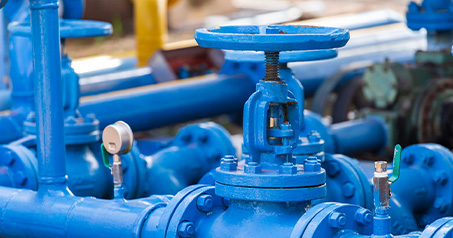
welding table clamps for versatile and secure workholding solutions
Understanding Welding Table Clamps A Comprehensive Guide Welding is an essential process in various
Water Shutoff Valve Operation and Maintenance Guide for Homeowners and Professionals
Understanding Water Valve Shutoff Importance and Procedures Water valve shutoff is a critical compon
Versatile Welding Table for Efficient Workbench Solutions
The Importance of Welding Tables in Workshop Design Welding is an essential skill in various industr
 English